An ergonomic chair is a seat designed to support your body, help you sit comfortably, and keep you healthy while you work or study. If you use a regular chair for hours, you might notice aches in your neck, back, or shoulders. Many office workers—up to 80%—deal with these problems, including stiff necks, sore backs, and even headaches. Poor seating can also lead to fatigue and poor blood flow. Sihoo leads the way in ergonomic innovation, making sure you get the comfort and support you deserve. Take a moment to think—how does your chair make you feel right now?

You might hear the word “ergonomics” and wonder what it really means. Ergonomics is all about designing things so they fit you, not the other way around. When you sit, work, or play, your body has natural movements and limits. Ergonomics helps you stay comfortable and safe by matching your environment to your needs.
Here’s how leading experts define ergonomics:
| Source | Definition |
| International Ergonomics Association | Ergonomics is the scientific discipline concerned with the understanding of interactions among humans and other elements of a system, and the profession that applies theory, principles, data, and methods to design in order to optimize human well-being and overall system performance. |
| Chapanis | Human factors (ergonomics) is a body of knowledge about human abilities, human limitations, and other human characteristics that are relevant to design. Human factors engineering is the application of human factors information to the design of tools, machines, systems, tasks, jobs, and environments for safe, comfortable, and effective human use. |
So, when you use an ergonomic chair, you’re using a product built with your comfort, health, and performance in mind.
You spend hours sitting at your desk, studying, or gaming. If your workspace doesn’t fit your body, you can end up with aches, pains, and even long-term injuries. Ergonomics matters because it helps prevent these problems and keeps you feeling your best.
Did you know? Ergonomic injuries make up about 33% of all worker injury and illness cases in the U.S.
Here’s why ergonomics is so important for you:
When your workspace matches your body’s natural mechanics, you feel less strain and more energy. You can focus better, make decisions faster, and even enjoy your work more. A well-designed chair or desk can make a huge difference in your daily life.

When you look at an ergonomic chair, you might wonder what sets it apart from a regular office chair. The answer lies in its features. These chairs are designed with your comfort and health in mind, using advanced technology and thoughtful design. Let’s break down what makes an ergonomic chair special.
You need a chair that fits you—not the other way around. Adjustable support is one of the most important features in any ergonomic chair. You can change the height, tilt, and even the depth of the seat to match your body. This helps you avoid aches and keeps your blood flowing.
Here’s a quick look at the most critical adjustable features you’ll find in high-quality ergonomic chairs:
| Feature | Description |
| Seat Height | Lets you set the chair so your feet rest flat, supporting your legs and preventing circulation issues. |
| Armrest Adjustability | Supports your arms, helping your shoulders and back stay relaxed. |
| Lumbar Support | Adjusts up and down to fit your lower back, sometimes letting you change the firmness. |
| Backrest Adjustments | Allows you to tilt or recline, which can improve comfort during long hours. |
| Seat Pan Adjustment | Moves the seat forward or backward to reduce pressure behind your knees. |
| Tilt Locks and Tension | Lets you control how easily the chair reclines, so you can find your perfect angle. |
Sihoo C300 and S300 chairs take adjustable support to the next level. The C300 features a smart weight-sensing mechanism that automatically adapts to your body, while the S300 uses an aviation-grade weight sensing system for a truly personalized experience.
Your lower back needs support, especially if you sit for hours. The lumbar and backrest design in an ergonomic chair helps keep your spine in its natural shape. This reduces muscle pain and fatigue, and it can even help prevent long-term injuries.
Research shows that advanced lumbar and backrest designs really work. In the UK, 27% of employees report back pain, leading to millions of lost workdays. A good ergonomic chair can help reduce these numbers by:
Armrests and headrests might seem like small details, but they make a big difference. The right armrest supports your arms and shoulders, helping you avoid tension and pain. The best ergonomic chairs offer multi-directional armrests, sometimes called 6D armrests.
A good headrest supports your neck and head. The S300’s ergonomic headrest adapts to the curve of your neck, letting you move freely while keeping your posture healthy.
The materials used in an ergonomic chair matter just as much as the design. High-quality materials make the chair last longer and feel better.
| Material Type | Characteristics | Impact on Durability and Comfort |
| Metal Frames | Strong, durable, supports higher weight limits, resists warping | Enhances longevity and stability over time |
| High-Density Foam | Long-lasting comfort, retains shape | Provides consistent support and comfort |
| Mesh Fabric | Breathable, flexible, resistant to sagging | Improves ventilation and comfort during long sitting hours |
| Leather | Luxurious feel, durable, requires maintenance | Offers comfort and a premium experience |
| Polyurethane Leather | Durable, easier to maintain than genuine leather | Balances comfort and longevity |
| Nylon or Polyurethane Casters | Durable, floor-friendly, suitable for different surfaces | Ensures smooth mobility and stability |
Sihoo’s C300 and S300 use premium mesh upholstery for breathability and comfort. The frames are made from high-strength aluminum alloy, which means your chair stays sturdy for years. The cushions use advanced shock-absorbing systems, inspired by car technology, to keep you comfortable even during long workdays.
Note: High-quality ergonomic chairs often last 5 to 10 years, and some premium models can last up to 15 years. That’s much longer than a traditional office chair.
Sihoo’s commitment to research and patented technology shows in every detail. Their chairs meet strict standards for safety and comfort, including certifications like ANSI/BIFMA and GREENGUARD. When you choose a Sihoo ergonomic chair, you get a product built on years of innovation and testing.
You might not notice your posture slipping until your back starts to ache. An ergonomic chair helps you sit up straight by supporting your spine’s natural curve. When you use a chair designed for your body, you feel the difference right away.
Sihoo’s chairs, like the S300 and C300, use dynamic lumbar support and adjustable features to guide your body into a healthier position. You get steady support, whether you’re working, gaming, or relaxing.
If you spend hours at a desk, you know how quickly pain can set in. Ergonomic chairs target the spots that hurt most—your neck, shoulders, and lower back. Medical research shows that these chairs can reduce pain severity and muscle strain.
| Study Focus | Findings | Common Features |
| Musculoskeletal pain | Less pain with ergonomic chair interventions | Adjustable features |
| Muscle activity | Lower neck, shoulder, and back muscle strain | Adjustable backrest and armrests |
| Inter-vertebral disc pressure | Decreased pressure on the spine | Height adjustable chairs |
Sihoo’s commitment to user well-being shines through in their research and patented designs. Their chairs use smart weight-sensing and shock-absorbing cushions to ease pressure and keep you comfortable all day.
When you feel good, you work better. Ergonomic chairs do more than just support your body—they help you stay focused and energized. Companies that invest in ergonomic seating see fewer sick days and more engaged employees.
Research has shown that improved ergonomic setups correlate with fewer sick days. When employees work in environments tailored to their physical needs, they experience reduced physical strain, leading to fewer instances of work-related injuries or illnesses.
You can see the benefits in the numbers:
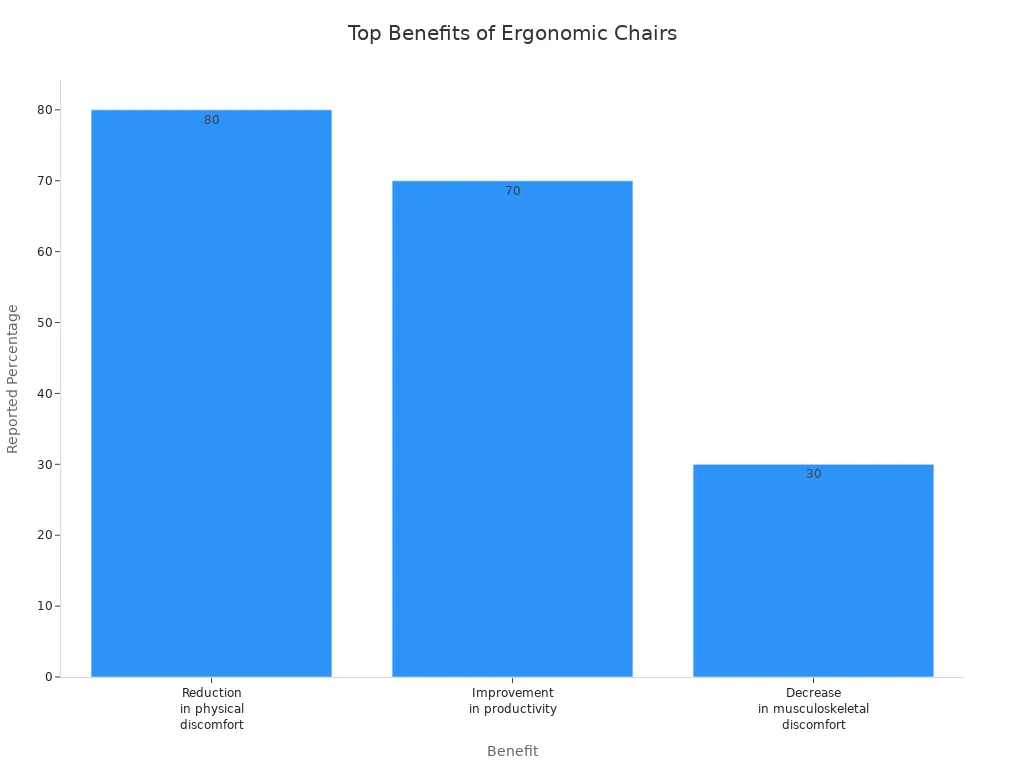
Bar chart showing percentages for ergonomic chair benefits
Sihoo’s research-driven approach means you get a chair that not only feels great but also helps you stay sharp and productive. Their focus on comfort and support lets you focus on what matters most—your work, your creativity, and your well-being.
When you look at an ergonomic chair and a traditional office chair side by side, you notice some big differences. Ergonomic chairs focus on your comfort and health. They let you adjust almost everything—seat height, armrests, lumbar support, and even the tilt. You can make the chair fit your body, not the other way around. Traditional chairs usually have a fixed design. You might get basic height adjustment, but that’s about it.
Here’s a quick comparison to help you see what sets them apart:
| Feature | Ergonomic Chairs | Traditional Chairs |
| Adjustability | High degree of adjustability for customization | Limited or no adjustability |
| Lumbar Support | Designed with adjustable lumbar support | Often lacks dedicated lumbar support |
| Comfort Features | Ample padding and breathable materials | Varies widely; may lack sufficient cushioning |
| Design Philosophy | Promotes health and productivity | Simplicity in design; often fixed structure |
| Movement Encouragement | Encourages movement with swivel and recline features | Typically keeps users in a fixed position |
You can see that ergonomic chairs, like those from Sihoo, use advanced materials and smart features to keep you comfortable all day. Traditional chairs stick to the basics, which might work for short periods, but not for long hours.
The chair you choose can shape your health over time. Traditional chairs often force you into a one-size-fits-all position. You might start to slouch or lean forward, which puts stress on your back and neck. Over months or years, this can lead to pain or even serious health problems.
Ergonomic chairs take a different approach. They support your spine’s natural curve and let you adjust the fit as your needs change. You get better posture, less strain, and more comfort. Over time, you reduce your risk of back pain, muscle fatigue, and other musculoskeletal issues.
Here’s how the long-term effects compare:
| Feature | Traditional Chairs | Ergonomic Chairs |
| Support | Limited lumbar support, leading to poor posture | Adjustable lumbar support promoting healthy posture |
| Design | One-size-fits-all, minimal adjustability | Customizable features for individual needs |
| Risk of Health Issues | Increased risk of back pain and discomfort | Engineered to reduce risk of musculoskeletal disorders |
| Posture | Poor alignment, strain on back and neck | Supports natural spine curvature, reducing strain |
| Comfort | Often uncomfortable for long periods | Enhanced comfort with adjustable features |
| Long-Term Health Benefits | Potential for developing musculoskeletal issues | Investment in long-term health, preventing disorders |
Choosing an ergonomic chair means you invest in your well-being. You give your body the support it needs, not just for today, but for years to come.
Picking the right chair starts with knowing what your body and workspace need. You want a chair that fits you, not the other way around. Take a look at the table below to see what you should consider:
| Factor | Description |
| Body Dimensions | Make sure the chair matches your height and build to avoid strain. |
| Seat Height | The best seat height is about a quarter of your height, but check your torso-to-leg ratio. |
| Activity Suitability | Think about what you do most—typing, gaming, or meetings. |
| Maintenance Costs | Consider how easy it is to keep the chair in good shape. |
When you sit, your feet should rest flat on the floor and your thighs should stay parallel to the ground. Look for a chair with adjustable seat height, lumbar support, and armrests. These features help you avoid slouching and keep your posture healthy. If you’re petite, choose a chair with a smaller seat pan and lower height. Taller users need higher seat adjustments and deeper seats. Heavier users should look for reinforced frames and wider seats.
Common mistakes include setting the chair too high or low, ignoring lumbar support, or forgetting about seat depth. Don’t overlook armrest adjustments or the benefits of a headrest. Remember, even the best chair can’t help if you sit with poor posture or stay seated too long.
Sihoo offers a range of chairs designed for different needs. Whether you work from home, study late, or game for hours, there’s a Sihoo chair for you.
| User Group | Need Description |
| Remote Workers | Versatile comfort for home offices |
| Students | Support for long study sessions |
| Gamers | Ergonomic features for extended play |
| Office Employees | Reliable support for long workdays |
| Individuals with Back Pain | Daily relief and support |
The C300 and S300 stand out for their premium build and advanced ergonomic support. Users love the comfortable seat pan, adjustable armrests, and dynamic lumbar support. The S300’s aviation-grade weight sensing and the C300’s smart adjustments help you find your perfect fit. Most users rate these chairs 4.8 out of 5 for comfort and quality.
If you want to learn more or see which chair fits your lifestyle, check out Sihoo’s website. You’ll find detailed guides and options for every workspace.
Choosing an ergonomic chair is one of the smartest moves you can make for your health and productivity. Here’s why experts recommend it:
Sihoo stands out as a trusted innovator. Reviews highlight the comfort and support of chairs like the Doro C300 Pro, with users rating them highly for long hours at the desk.
| Aspect | Cost/Savings |
| Cost of Ergonomic Chairs | Higher than standard office furniture |
| Average Cost of Back Injury | Over $15,000 per incident |
| Reduction in Injury Rates | Up to 75% with ergonomic programs |
| Healthcare Cost Savings | Billions due to musculoskeletal disorders |
| Workers’ Compensation Claims | Reduced with ergonomic chairs |
Take a moment to look at your current chair. If you want to feel better and work smarter, explore Sihoo’s range and discover what true comfort feels like.