Sihoo'nun resmi bloguna hoş geldiniz! Burada, Ergonomik mobilyalar üzerine değerli bilgiler, sektör güncellemeleri ve uzman görüşleri sunmayı amaçlıyoruz. İnsan sağlığı ve ergonomik teknolojiye odaklanan bir şirket olarak, okuyucularımızı güçlendirmek ve bilgilendirmek için bilgi ve deneyimlerimizi paylaşmaya kararlıyız.
Ergonomik Sandalye Bel Desteği: Gerçekten İhtiyacınız Var mı
Virtually every “ergonomic” office chair boasts “premium lumbar support,” yet lower back pain remains the unwelcome companion of countless desk workers. This leaves us wondering: is this ubiquitous feature the key to spinal salvation, or the comfort industry’s most overhyped promise? Let’s move beyond the marketing jargon and examine the real ergonomic science behind lumbar support to find an answer that holds water.
1. Demystifying Lumbar Support: It’s More Than Just a Bump
1.1 Beyond the “Bump”: A Functional Definition of Lumbar Support
Biomechanically speaking, lumbar support is far more than a simple protrusion in your chairback. Its true purpose is to actively maintain the natural inward curve of your lower spine (your lumbar lordosis). This isn’t just about comfort—it’s about physics. When you sit, your pelvis tends to rotate backward, flattening this critical curve and putting your spinal discs under immense pressure.
A well-engineered lumbar support acts as a pivot point to counteract this, helping to keep your pelvis in a neutral position. Think of it not as a thing, but as a function: a dynamic system working to preserve the elegant “S” shape of your spine against the relentless pull of gravity in a seated position.
1.2 The Two Main Technical Paths for Lumbar Support
Not all lumbar systems are created equal. Understanding this fundamental split is key to making an informed choice.
Path One: Adjustable Lumbar Support (Manual Tuning)
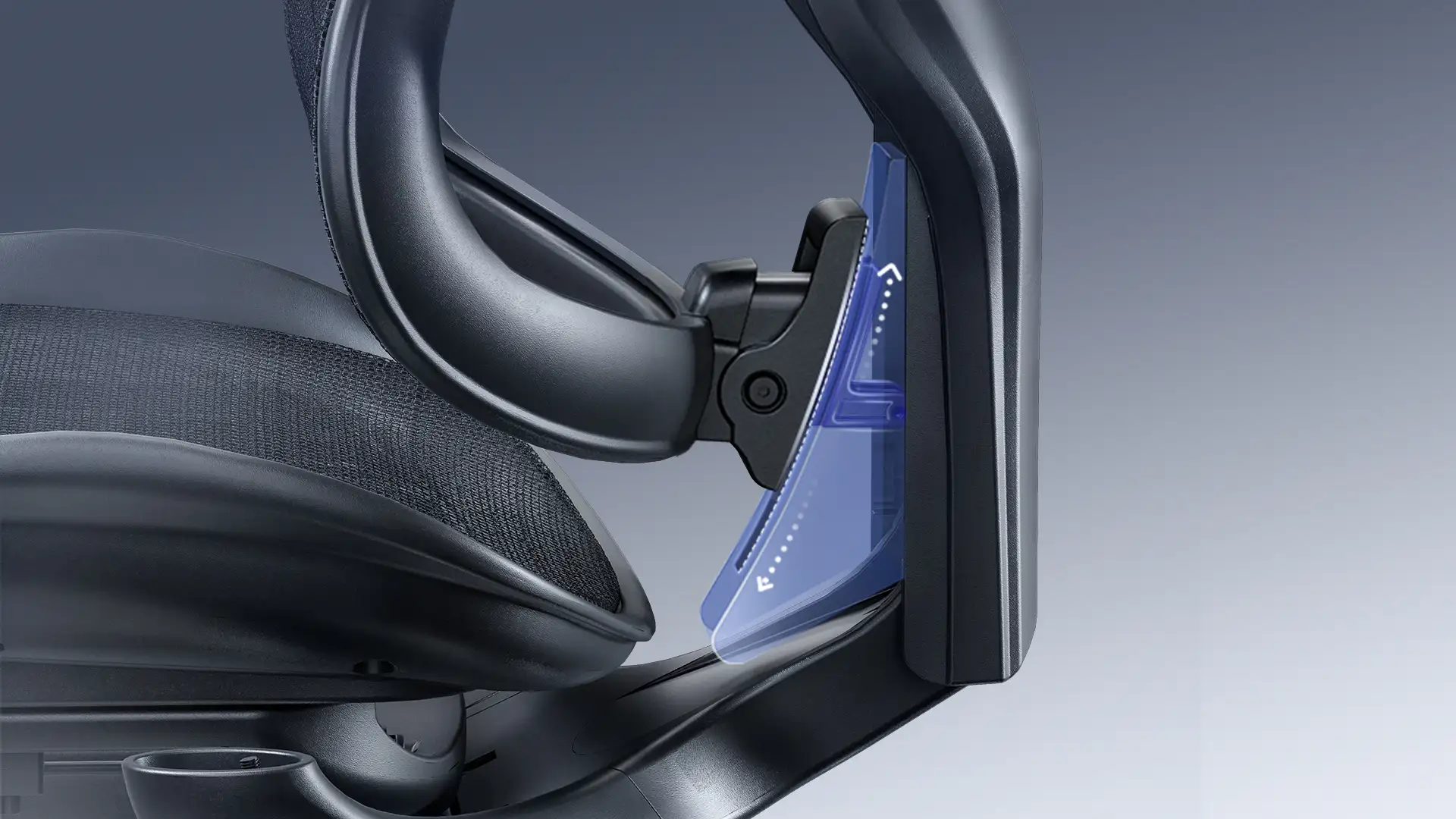
How it Works: This common approach uses a mechanical component—typically a pad—that you manually adjust for height and depth to find your sweet spot.
The Upside: It offers a high degree of customization—if you’re willing to put in the time to find the right setting.
The Downside: It’s inherently static and forgetful. The moment you lean back to think or shift to cross your legs, that perfectly tuned spot is now in the wrong place, requiring you to play adjustment roulette all over again.
Path Two: Adaptive Lumbar Support (Dynamic Movement)
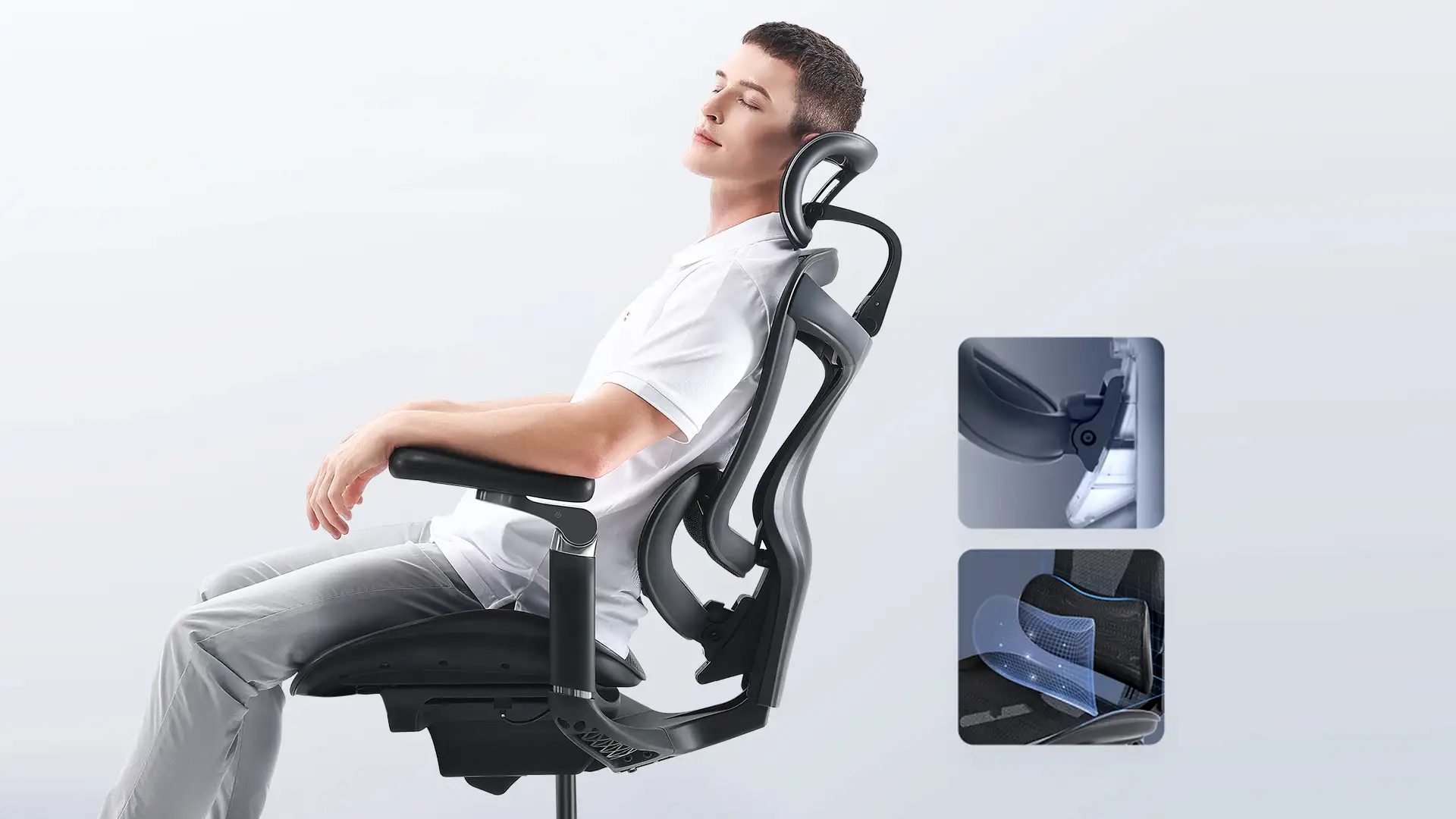
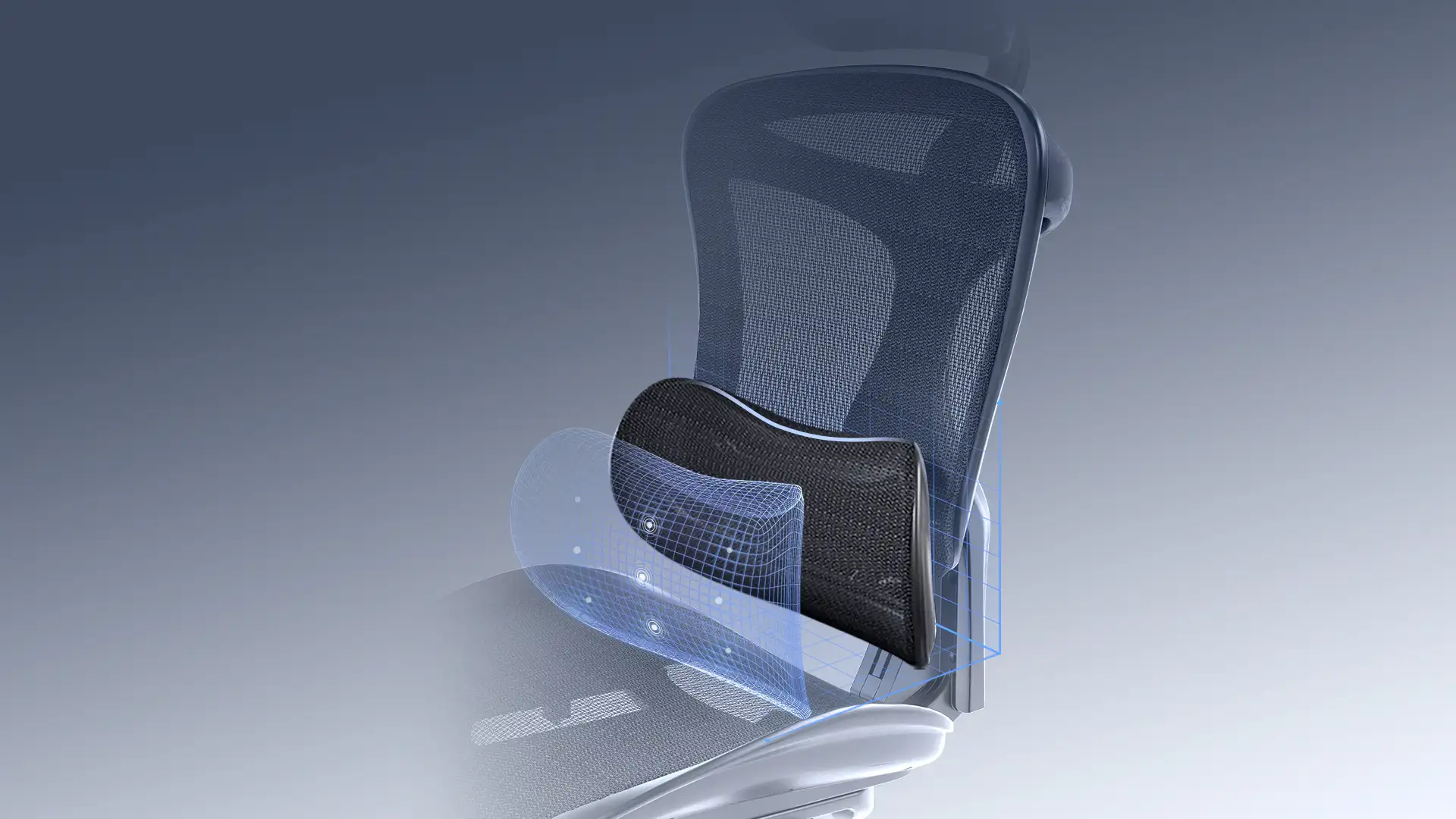
How it Works: This is the more sophisticated solution. Using intelligent mechanisms like flexible frames or tension-responsive materials, the support moves with you, automatically recalibrating its position and pressure as you recline or shift.
The Upside: It delivers continuous, “set-it-and-forget-it” support that feels seamless and intuitive, perfectly mirroring a dynamic workstyle.
The Downside: The complex engineering required makes this the more premium (and costly) solution, typically reserved for mid-to-high-end chairs.
2. The Diagnosis: Does Your Back Actually Need Lumbar Support?
2.1 Telltale Signs You Need High-Quality Lumbar Support
Scenario 1: The Static Sitter (Coding, Data Analysis, Writing)
The Pain Point: Your lower back endures a constant load, and its natural curve slowly erodes over hours of stillness.
The Pain Point: Your core muscles are already fatigued or weakened and are crying out for external help to stabilize the spine.
The Solution: You need a scientifically calibrated support system that provides broad, even pressure distribution—not a hard, aggressive push that could turn discomfort into outright pain.
2.2 Common Myths and Misconceptions About Lumbar Support
Myth 1: “The firmer the push, the better the support.”
The Truth: This is a dangerous misconception. An overly rigid lumbar knob can force your pelvis into an anterior tilt, violently disrupting your spinal alignment and actively increasing disc pressure. Proper support should feel like a firm, full-handed catch, not a sharp poke in the back.
Myth 2: “You set it once and forget it.”
The Truth: Your body is in constant, subtle motion. The ideal point of support is a moving target as you transition from an upright typing pose to a reclined thinking position. This is precisely why chairs with a wider range of adjustability or intelligent adaptive mechanisms are superior for long-term comfort.
Myth 3: “Lumbar support is a license to slouch.”
The Truth: Lumbar support is an aid, not a substitute for good posture. It works in concert with the fundamentals: feet flat, hips all the way back, and shoulders relaxed. It’s a partner in spinal health, not a get-out-of-posture-free card.
3. The Buyer’s Guide: Finding a Chair with “Gold Standard” Lumbar Support
3.1 Four Critical Questions to Ask Before You Buy
Cut through the marketing fluff by asking these pointed questions:
“Does this lumbar support have my back when I recline?” (This tests for dynamic support versus static failure.)
“Is the support force targeted to my lumbar curve, or is it just a vague shove against my entire back?” (This tests for precision engineering and biomechanical understanding.)
“How can I be sure it will conform to the unique architecture of my spine?” (This tests for true personalization versus a one-size-fits-most approach.)
“Is the lumbar support an integrated part of the chair’s backbone, or just a bolted-on afterthought?” (This tests for holistic, systemic design.)
3.2 The Future of Lumbar Support: Adaptive and Intelligent Systems
The technology is evolving beyond a simple bump:
Trend 1: Multi-Dimensional Adaptive Support: The next generation doesn’t just push forward and back. It moves laterally and rotates, offering a “cradling” sensation that supports you through micro-movements and shifts, providing a truly holistic sense of stability.
Trend 2: Intelligent Response: Through advanced mechanics, lumbar supports are becoming smarter, automatically calibrating their resistance and position based on the user’s weight, posture, and movement in real-time—delivering a truly personalized experience with zero manual input.
3.3 Your Action Plan: From Test Drive to Purchase
During the Test Sit: Be a difficult customer. Recline deeply, lean side-to-side, and shift forward. The support should feel like it’s following you, not disappearing or creating new pressure points. It should be a silent partner, not a distracting presence.
When Researching: Look past fluffy adjectives. Scour product descriptions and specs for details on the underlying mechanism—terms like “four-bar linkage,” “flexible polymer frame,” or “tension-responsive” signal a more intelligent design.
When Deciding: Invest your budget in chairs that demonstrate genuine innovation in their lumbar support system. This is the single component that will most directly dictate your long-term comfort, focus, and spinal health.
4. Conclusion: The Real Investment is in the Science of Support
A superior lumbar support system shouldn’t be something you’re constantly aware of. At its best, it’s an intelligent, silent partner—guarding your spine when you’re active and holding you steady when you’re tired. It must be an inseparable part of the chair’s DNA, working in concert with the backrest, seat, and mechanism.
Final Recommendation: Shift your focus from the basic question of “does it have lumbar support?” to the more revealing one: “how does its lumbar support actually perform?” Understanding the engineering narrative behind the feature is your most powerful tool for seeing through the marketing haze and selecting a throne that will truly safeguard your well-being for the long haul.