In today’s workplaces, more than 80% of professionals sit for over six hours a day (World Health Organization, 2022). Prolonged static sitting doesn’t just cause backaches and neck strain—it’s also strongly associated with chronic conditions like cardiovascular disease and metabolic syndrome. As the piece of furniture we interact with most throughout the workday, the office chair has long outgrown its role as a simple “seat.” It’s now a cornerstone of a healthy, human-centered workspace.
The right chair doesn’t force you to adapt to it—instead, it adapts to you. And the key to making that happen? Adjustability. Far more than just a comfort feature, adjustability is the foundational design principle for preventing work-related musculoskeletal disorders (WMSDs) and boosting focus and productivity. Whether you’re shopping for an adjustable office chair, an ergonomic office chair, or a home office ergonomic desk chair, adjustability is the true litmus test of whether a chair truly “understands” the human body.
For those struggling with lower back pain, choosing the best office chair for back pain isn’t about temporary relief—it’s about proactively reshaping how pressure is distributed across your spine from the moment you sit down.
According to China’s National Standard for Adult Body Dimensions (GB/T 10000-2023), adult male height ranges from 155 to 188 cm, while females range from 145 to 178 cm. Sitting height can differ by over 15 cm, and thigh length varies by more than 12%. This means no fixed-dimension chair can properly support seat depth, seat height, or lumbar placement for everyone.
Data from over 100,000 Chinese users confirms it: only chairs with multi-dimensional adjustability can deliver truly personalized support—what we call “one chair, one person.”
Modern work is anything but static. You lean forward to type, recline during video calls, and swivel slightly while reviewing documents. A rigid chair can’t keep up with these dynamic postural demands, forcing you to twist your spine or dangle your legs just to “fit.” Over time, this leads to muscle fatigue and joint stress.
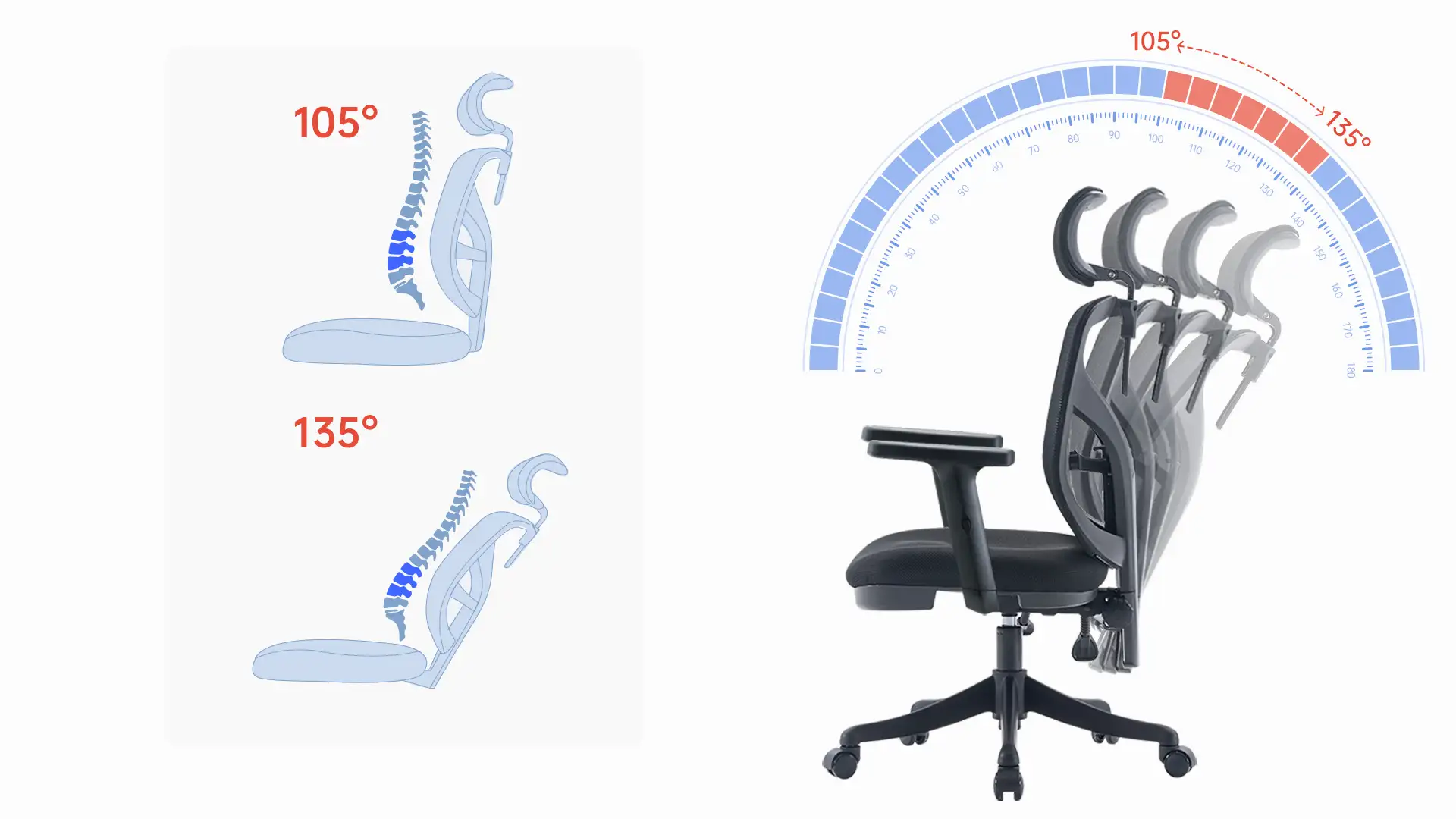
That’s where synchronized tilt mechanisms come in. By linking the backrest and seat pan to recline together—typically in a 2:1 ratio—and offering tension control calibrated for body weights from 40 to 120 kg, these chairs let you shift naturally between 90° and 120°. This subtle “micro-movement” relieves static load and keeps your spine nourished and relaxed. This dynamic responsiveness is what truly sets an adjustable office chair apart from ordinary seating.
Research shows that pressure on lumbar discs while sitting without support can be up to 1.4 times higher than when standing relaxed (Nachemson, 1981). Without proper lumbar support, the natural inward curve of your lower spine—the lumbar lordosis—flattens, accelerating disc degeneration and triggering low back pain (LBP). With well-fitted support, however, disc pressure can actually drop below standing levels. Adjustable lumbar support breaks this cycle at the source. That’s why users seeking an ergonomic desk chair with footrest or an ergonomic chair for lower back pain consistently rank lumbar adjustability as their top priority.
Seat height is the most basic—but critical—adjustment. Ideally, your feet should rest flat on the floor, knees bent at 90°–110°, and thighs parallel to—or slightly angled downward from—the ground. Too high, and the seat edge compresses the back of your knees (popliteal fossa), restricting circulation. Too low, and your pelvis tilts backward, collapsing your spine’s natural alignment.
High-precision pneumatic lift cylinders typically offer a 42–57 cm range, covering the seated height requirements for the vast majority of adult users in China. Unsure how to set it? Follow this golden rule: adjust your office chair height so your feet are flat and knees form a 90° angle. It’s the single most important starting point.
Seat depth—the distance from the front edge of the seat to the backrest—must match your thigh length. Too deep, and the seat edge presses into your knees, pinching nerves and blood vessels. Too shallow, and your sit bones (ischial tuberosities) hang off the edge, concentrating pressure in a small area. Prolonged pressure—even well below 100 mmHg—can impair circulation over time, especially during long sitting sessions.
Take the M57 model, for example: its sliding seat depth mechanism offers up to 5 cm of adjustment, letting you fine-tune the gap between the seat edge and your knees (ideally 2–4 cm). This ensures even weight distribution and eliminates pressure points. A chair with adjustable seat depth is essential for anyone with longer or shorter legs—or anyone who’s ever felt their chair “doesn’t fit.”
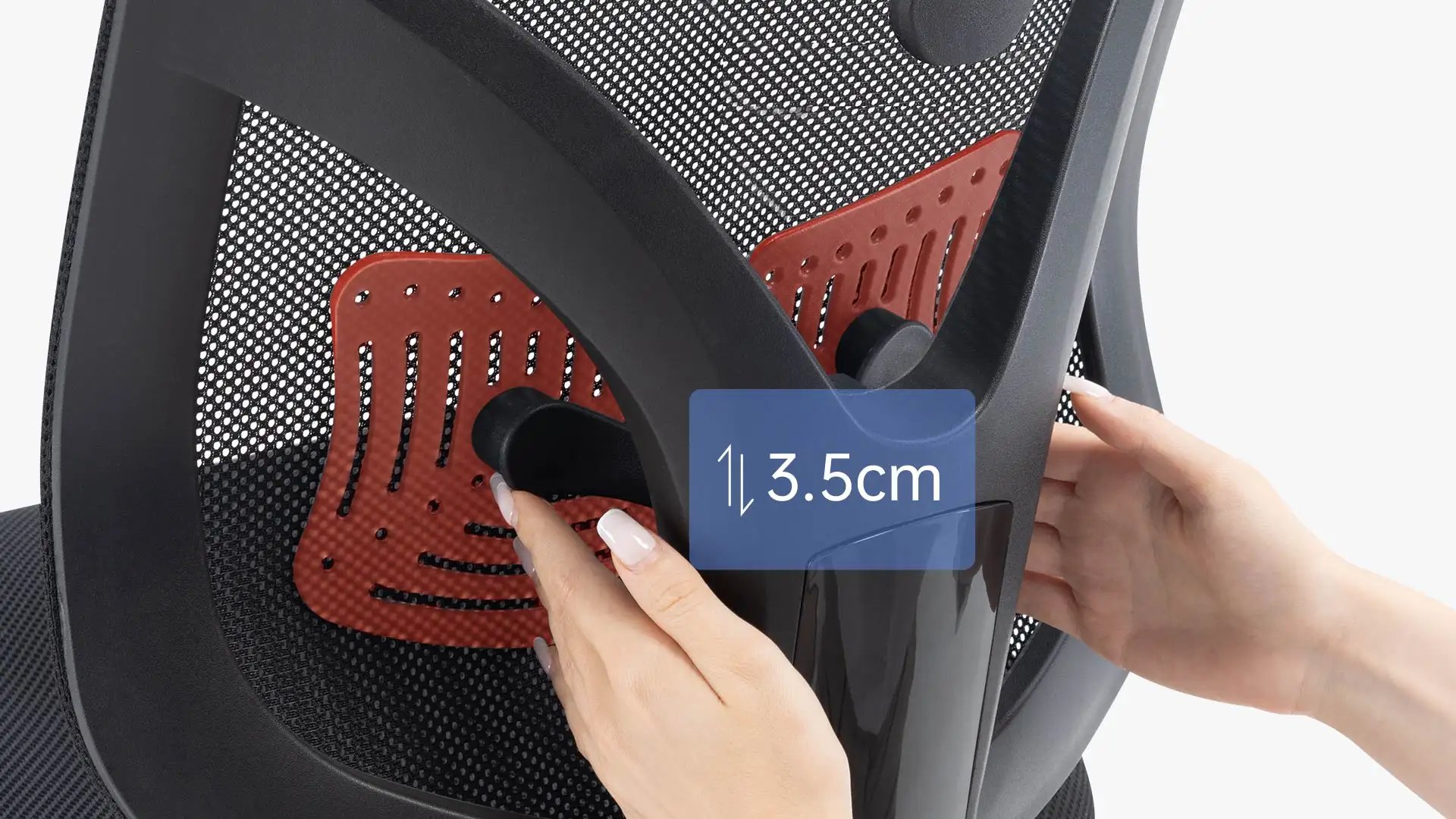
Effective lumbar support targets the L3–L5 vertebrae and should be both height- and depth-adjustable to match your unique spinal curvature. The ideal support provides 2–5 cm of gentle forward push to maintain your lumbar lordosis.
Advanced systems like “dynamic floating lumbar support” offer dual-axis adjustment—up/down and in/out—so the support hugs your lower back precisely where you need it. Biomechanical studies indicate that well-fitted lumbar support can reduce lumbar disc loading by 20% or more, significantly reducing fatigue. For desk-bound professionals, an adjustable lumbar support office chair isn’t a luxury—it’s a necessity. It’s also why these chairs consistently top lists of the best office chair for back pain.
Static backrests lock your spine in one position. High-performance ergonomic chairs use synchronized tilt mechanisms that let the backrest and seat move together, usually at a 2:1 ratio. A tension knob lets you customize the resistance based on your weight, so reclining feels effortless—not wobbly or stiff. This freedom to shift between focused upright posture and relaxed recline promotes disc hydration and eases muscle tension.
Truly ergonomic armrests offer 3D adjustability: height (to keep elbows at 90°), width (to prevent shoulder hiking), and angle (to align with your forearms). When properly set, they can reduce the muscular effort needed to support your arms by 30–50%, significantly lowering strain on your trapezius and rotator cuff muscles.
Premium models feature 4D armrests—adjustable in height, depth, width, and pivot angle—meeting ISO 9241-5 standards (minimum 8 cm height range). This level of customization is key to preventing shoulder pain and carpal tunnel syndrome, making a desk chair with adjustable arms ideal for frequent keyboard/mouse users.
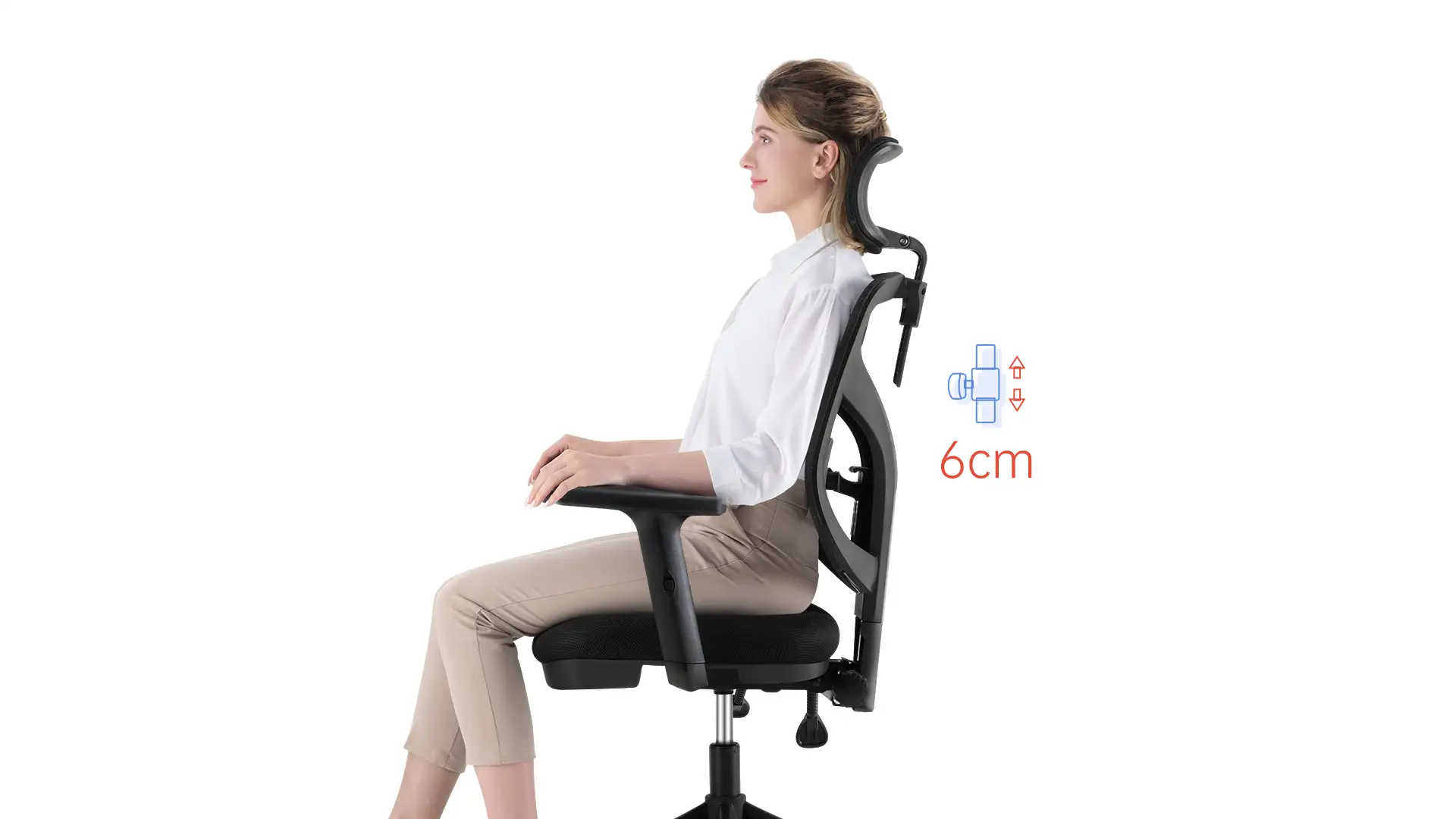
If you spend more than six hours a day looking at screens, a headrest can provide crucial cervical support. Adjustable models let you fine-tune both height and tilt to keep your head in a neutral position—no forward “tech neck.”
Meanwhile, an office chair with footrest is a game-changer for midday breaks or deep-thinking sessions, improving leg circulation and overall comfort. Some chairs now integrate this feature seamlessly.
And with remote work here to stay, the mesh office chair has become the go-to for a comfortable office chair—thanks to its breathability, lightweight design, and balanced support. High-tension mesh keeps you cool all day while offering firm, adaptive backing. For all-day focus, consider a mesh ergonomic chair with headrest, which delivers triple-zone support for neck, lumbar, and back—perfect for knowledge workers logging long hours.
User surveys reveal that 87% of long-term ergonomic chair users report over 60% fewer backaches—and gain an average of 1.2 extra hours of focused work per day. Adjustability isn’t just about comfort; it’s a productivity multiplier.
Interestingly, this demand for personalization extends beyond the office. As gaming and content creation sessions grow longer, even كراسي ألعاب مريحة now prioritize adjustable lumbar support, armrests, and recline—proving that regardless of use case, personalized support is universal.
True ergonomics isn’t a marketing buzzword—it’s a science-backed, measurable, and adjustable reality. The best chairs are built from the ground up around multi-dimensional adjustability, not tacked on as an afterthought. Whether budget-friendly or premium, a chair must include core adjustments (seat height, lumbar support, armrests) and meet rigorous durability standards like BIFMA X5.1 or GB/T 39223-2020 to ensure long-term reliability.
Real comfort isn’t about sinking into a plush cushion—it’s about sitting all day without fatigue. And that only happens when your chair “listens” to your body. That’s the true power of adjustability.
As human-centered design reshapes the modern workplace, chair adjustability has evolved from a nice-to-have into a strategic health and performance tool. By accommodating individual differences, supporting natural movement, and redistributing biomechanical stress, a truly adjustable chair becomes your first line of defense against the hidden harms of sitting.
Adjustability shouldn’t be reserved for high-end models—it should be the baseline for every ergonomic office chair. Because the chair that truly “gets” you doesn’t demand you change your posture to fit it. Instead, it quietly, intelligently, and comfortably adapts to your body, your habits, and your work. That’s not just smart design—that’s human-centered care, built into every seat.