In today’s work environments — where prolonged desk-bound tasks are the norm — a truly comfortable ergonomic mesh office chair is not just a simple tool that merely “allows you to sit.” It has become an essential equipment for supporting health, enhancing productivity, and alleviating fatigue.
The market offers a wide array of options — from basic mesh office chairs to premium full mesh office chairs and high back mesh office chairs, with prices ranging from hundreds to tens of thousands of RMB. However, what truly determines whether a chair becomes “more comfortable the longer you sit” are three critical technical parameters that can’t be told from eyes: material density, tension structure, and lumbar synchronization mechanism.
This is especially true for users seeking a mesh office chair with lumbar support rated for 300 lb capacity, or advanced users who prefer an adjustable mesh office chair with headrest. These three parameters directly define the long-term using experience.
This article adopts a hands-on, user-testing perspective to guide you in identifying — through observation, physical trial, and specification analysis — how a mesh back office chair or mesh office chair with mesh seat performs across these three dimensions.
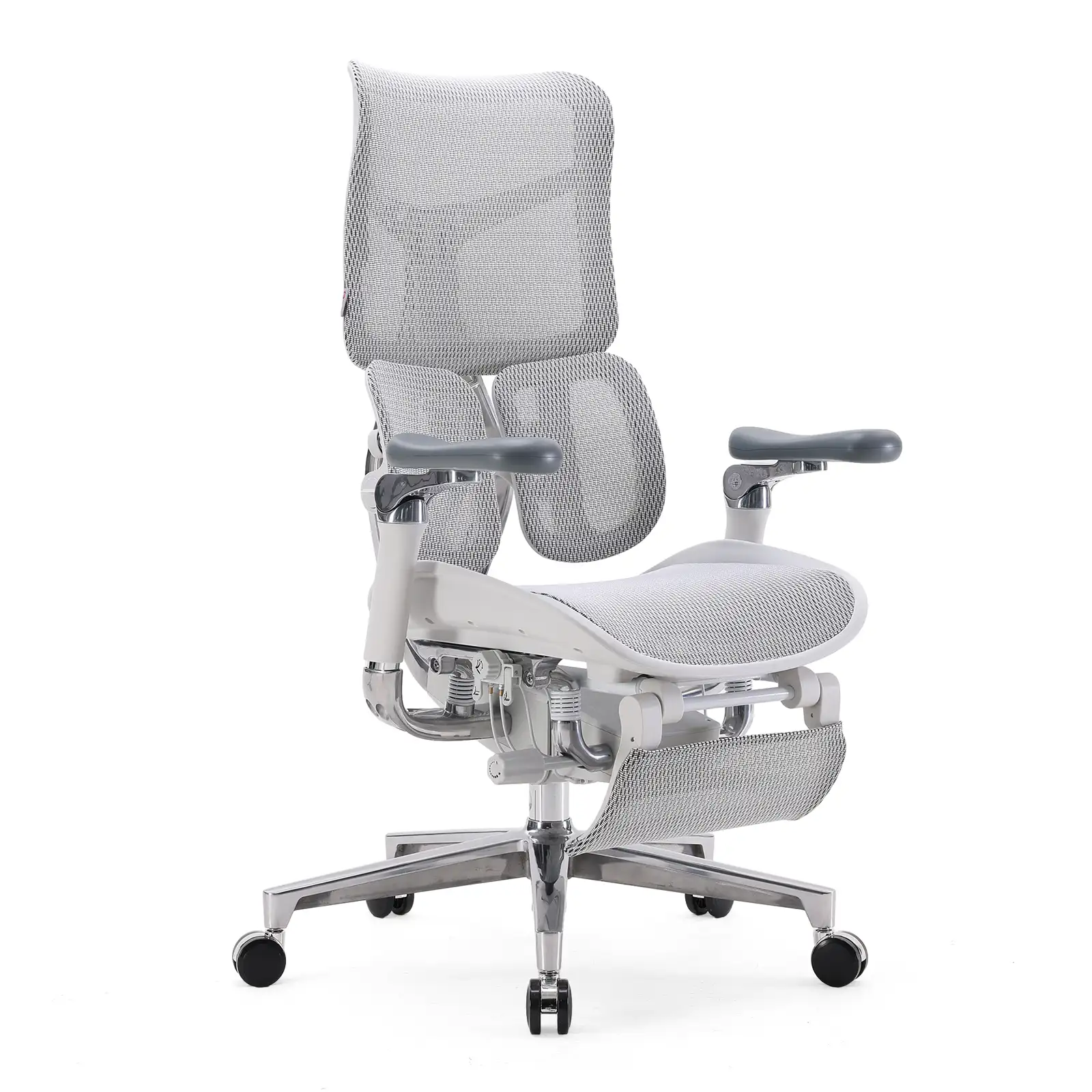
It is widely accepted that “mesh = breathable.” However, “mesh = durable” requires careful evaluation. Many users report that after extended use, their chairs develop sagging seats, loose backrests, or diminished support — issues often rooted in insufficient material density.
Material density refers to the weave density and yarn thickness per unit area of the mesh fabric. Higher density enhances resistance to deformation and reduces the likelihood of slackening under prolonged pressure. Low-density mesh may feel soft initially but lacks structural support, potentially leading to discomfort over time.
1. Review Product Description Keywords
Prioritize products explicitly labeled with terms such as “high-density mesh,” “reinforced one-piece molded mesh,” etc. For example, the Sihoo DORO S300 series features an aerospace-grade “floating wing” shock-absorbing seat cushion paired with high-density mesh, designed to disperse hip pressure and enhance long-term comfort.
2. Observe Structural Compensation Design
3. In-Store Testing Tips (Recommended)
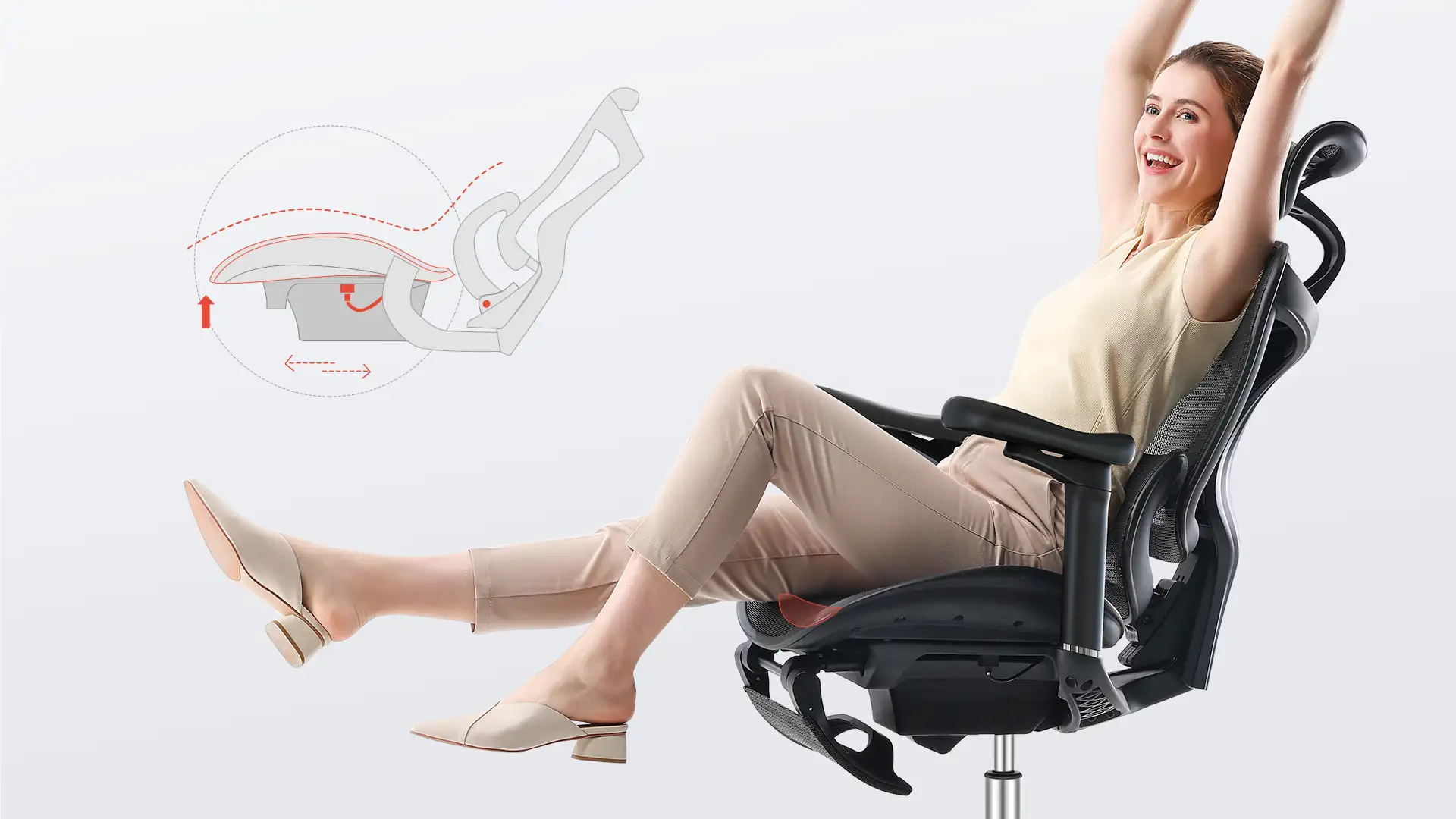
A high-performing mesh back and seat office chair should dynamically adjust its support intensity and distribution as the user leans forward to type, reclines to think, or turns sideways — this is the value of a well-engineered tension structure.
The tension structure refers to the connection method between mesh and frame, the force distribution mechanism, and the elastic feedback system. A superior structure enables “zoned support,” delivering differentiated pressure relief across lumbar, thoracic, and gluteal regions.
إن Sihoo C300 series employs a “Smart Domino Dynamic Mechanism” (proprietary brand technology), designed to synchronize seat and backrest movement — maintaining natural spinal curvature during recline.
1. Examine Functional Descriptions
Prioritize products labeled with “seat-back linkage system,” “synchronized tilt,” or similar terminology. The Sihoo V1 series supports up to 140° recline; its tension system is engineered to maintain uniform support even at extreme angles — ideal for users who frequently recline for rest.
2. Observe Recline Range and Locking Mechanisms
Products offering wide-angle recline with “multi-position locking” or “infinite tilt adjustment” typically demand higher structural stability from their tension systems.
3. Test Dynamic Conformity During Trial Sitting

“Having a lumbar support” does not equate to “providing effective lumbar protection.” Many mesh lumbar back support for office chair systems are static — their effectiveness diminishes as users shift posture. A superior solution is a synchronized or adaptive lumbar mechanism.
Lumbar synchronization refers to a lumbar support system that automatically adjusts its position and pressure intensity in response to user posture, maintaining continuous support for the lumbar spine. The Sihoo S300 series features a “Weight-Sensing Lumbar Support” (proprietary brand technology), engineered to deliver persistent contouring as posture changes
1. Review Adjustment Mechanism Descriptions
Look for terms such as “adaptive lumbar,” “elastic synchronized support,” or “auto-contouring.”
2. Examine Connection Between Lumbar Pad and Backrest
Synchronized lumbar supports are typically integrated into the backrest via mechanical linkage or unified structural design.
3. Simulate Usage Scenarios During Testing
| Comparison Dimension | DORO S300 Series | DORO C300 Series | V1 Series | M59 Series |
| Product Positioning | Premium Flagship · Intelligent Ergonomics | Dynamic Adaptation · Multi-Posture Work | High-Back Leisure · Max Recline (high back) | Value-Oriented · Basic Office Use |
| Material & Seat Features | Aerospace Floating Wing Shock-Absorbing Cushion | Waterfall-Inspired Seat Cushion | Saddle-Shape Cushion | Breathable Mesh + Basic High-Density Foam |
| Tension / Recline System | Seat-Back Linkage System | Smart Domino Dynamic Mechanism | 140° Max. Recline with Synchro Tilt | Basic Recline + 3-Position Lock |
| دعم قطني | Weight-Sensing Lumbar Support | Bionic Adaptive Lumbar Support | 4D Adjustable Lumbar Support | Soft Elastic Lumbar Pillow |
| مسند الرأس | Integrated Adaptive Headrest | Height-Adjustable Headrest | Multi-Angle Adjustable Headrest (with headrest) | Optional Headrest |
| Armrest Adjustment | 6D Synchronized Mechanical Arm | 6D Functional Armrest | 4D Aluminum Armrest (PU-Covered Edges) | 3D Up/Down Only |
| Recommended For | Professionals sitting 8+ hours, seeking ultimate support and intelligent contouring | Advanced users who frequently shift postures and demand dynamic support | Users who enjoy reclining, napping, or desire high-back envelopment | Budget-conscious users, students, home or basic office use |
A suitable office chair mesh is fundamentally one that “matches your body, habits, and budget.” Whether you seek an armless mesh office chair, an ergonomic mesh office chair with footrest, or a mesh swivel office chair, the core remains evaluating whether these three parameters meet your requirements.
The three-parameter evaluation framework provided in this article enables you to rapidly assess product quality across any brand. The Sihoo product comparison table serves as a reference template — use this checklist to compare alternatives and identify the chair that truly fits your needs.
Invest your health — start by choosing the right chair. May you sit comfortably and work efficiently.
Tip: Of the 8 items below, the first 3 are essential for foundational support (recommended for all buyers). The remaining 5 enhance comfort and are optional based on personal needs. No chair fulfills every ideal parameter — the key is aligning with your core requirements.
☐ Is the mesh high-density? Are terms like “reinforced” or “one-piece molded” included? Are mesh pores fine and uniformly distributed? Does the material rebound quickly when pressed?
☐ Does the seat and backrest feature zoned or reinforced structures (e.g., shock-absorbing, saddle-shaped)?
☐ Is a “dynamic mechanism” or “synchronized tilt” explicitly stated? ☐ Does the lumbar support offer “adaptive” or “elastic follow” functionality?
☐ Is the maximum recline angle suitable (e.g., 130°/140°)? Is it synchronized with lumbar support?
☐ Does lumbar support remain engaged during recline?
☐ Does the mesh follow body movement?